

 English
 русский
 Español
 عربى


Home / News & Events / Industry News / Which Curtain Tape Specifications Matter Most for Custom Curtain Production?
Which Curtain Tape Specifications Matter Most for Custom Curtain Production?
Custom curtain production often involves different fabric types, heading styles, window dimensions, and customer preferences. A tape that works well for one curtain design may not be suitable for another, particularly when the required pleat pattern or finished appearance changes. For manufacturers and wholesale buyers, defining product specifications before production helps reduce unnecessary adjustments and makes repeat orders easier to manage. Careful planning also allows curtain components to be selected according to the finished product rather than relying on a single standard configuration.
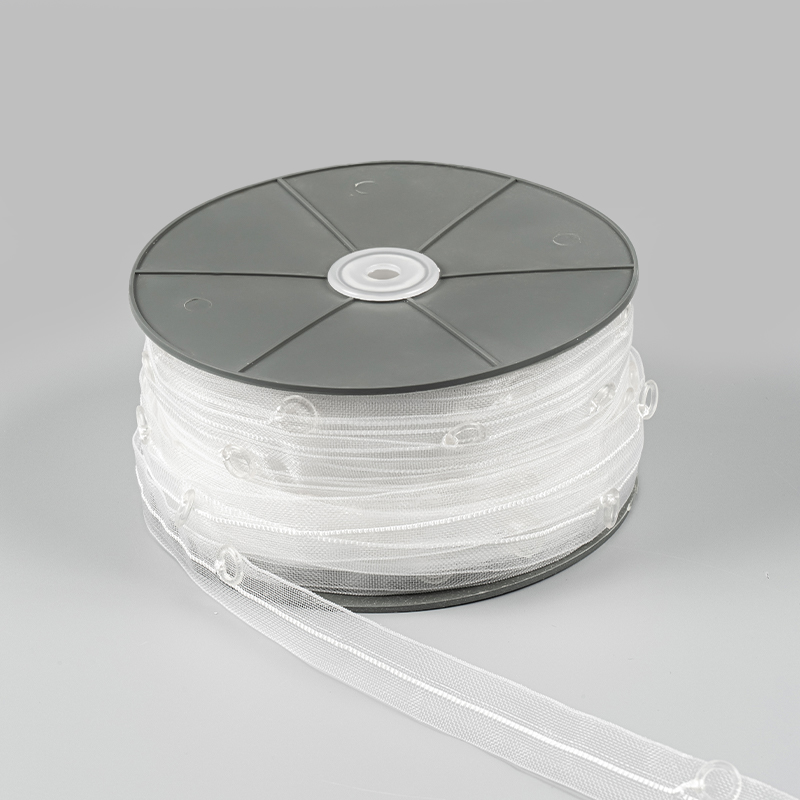
Choose the Width According to the Curtain Design
Tape width affects the space available for sewing, hook placement, and heading formation. Wider and narrower options may serve different design requirements, depending on the curtain fabric and the desired finished appearance.
Before confirming an order, buyers should consider the planned heading depth, sewing allowance, and installation method. A sample made with the intended fabric can help determine whether the selected width provides enough support without creating excessive bulk at the top of the curtain.
Manufacturers should also confirm the required finished dimensions instead of selecting tape solely by its nominal width.
Define the Required Pleat Style
Different curtain headings create different visual effects and require different tape configurations. Some designs prioritize evenly distributed gathers, while others require a more structured arrangement of pleats or specific hook positions.
When sourcing Nylon Curtain Tape, buyers should communicate the intended heading style and the expected spacing between pleats. This information helps the manufacturer assess the appropriate pocket arrangement and gathering ratio.
A clear specification is especially useful for custom curtain programs, where several styles may share similar fabrics but require different heading treatments.
Coordinate Tape Color With Curtain Fabric
Although the tape is often positioned behind the visible curtain heading, its color can still matter during sewing, handling, and inspection. A suitable color choice can simplify production and help maintain a consistent appearance when the heading is viewed from different angles.
For custom projects, buyers should identify the preferred color and confirm availability before mass production. If exact color matching is important, a physical sample provides a more practical reference than a description alone.
Manufacturers can also record approved color references to support consistency when the same design is reordered.
Check Fabric Compatibility Before Bulk Production
Curtain fabrics differ in thickness, flexibility, and weight. These characteristics influence how the heading gathers and how easily the tape can be attached.
Before approving a configuration, production teams should test the tape with the actual fabric, lining, and sewing method. The sample should be reviewed for even gathering, acceptable seam appearance, and compatibility with the intended hook arrangement.
This step helps identify potential adjustments while the project is still at the sampling stage.
Prepare a Clear Customization Brief
A complete product brief gives the manufacturer a reliable basis for quotation, sampling, and production planning. Buyers should provide the following information where applicable:
- Required tape width and material
- Preferred color and roll length
- Heading style and pocket configuration
- Fabric type and intended application
- Packaging, labeling, and branding requirements
Clear details reduce uncertainty when multiple specifications are included in one purchase order.
Keep Repeat Orders Consistent
For distributors and curtain manufacturers, repeat orders may arrive months after the original production run. Retaining approved samples, product codes, dimensions, and color references helps both parties identify the correct specification.
Any proposed change to the material, width, or pocket arrangement should be reviewed before production. This makes it easier to distinguish an approved design update from an unintended specification difference.
Turn Custom Requirements Into Practical Production Plans
Successful customization begins with a clear understanding of the finished curtain and the working conditions of the production line. By coordinating tape dimensions, pleat design, color, fabric compatibility, and packaging requirements, manufacturers can develop configurations suited to different customer needs. For overseas buyers, working directly with a Nylon Curtain Tape manufacturer can also simplify sample confirmation and repeat-order communication, supporting a more organized purchasing process.
Recommended News


- Contact Us
-
-
E-mail:422857394@qq.com
-
Phone:+86-13957583738
-
Address:Building 1, No. 765 Anchang Road, Kebei Industrial Park, Keqiao Economic Development Zone, Qixian Subdistrict, Keqiao District, Shaoxing City, Zhejiang Province, China
-

Fill out our contact form and we'll connect
you with the people who can help.
you with the people who can help.
