

 English
 русский
 Español
 عربى


Home / News & Events / Industry News / Can Better Quality Control Improve Consistency in Curtain Tape Production?
Can Better Quality Control Improve Consistency in Curtain Tape Production?
In curtain manufacturing, small differences in sewing materials can create noticeable problems when finished products are produced in large quantities. Uneven gathering, inconsistent pleat spacing, and difficulties during stitching may affect the appearance of the final curtain and create additional work on the production line. For manufacturers and wholesale buyers, consistent material quality is therefore an important part of maintaining stable production, meeting order specifications, and reducing avoidable rework.
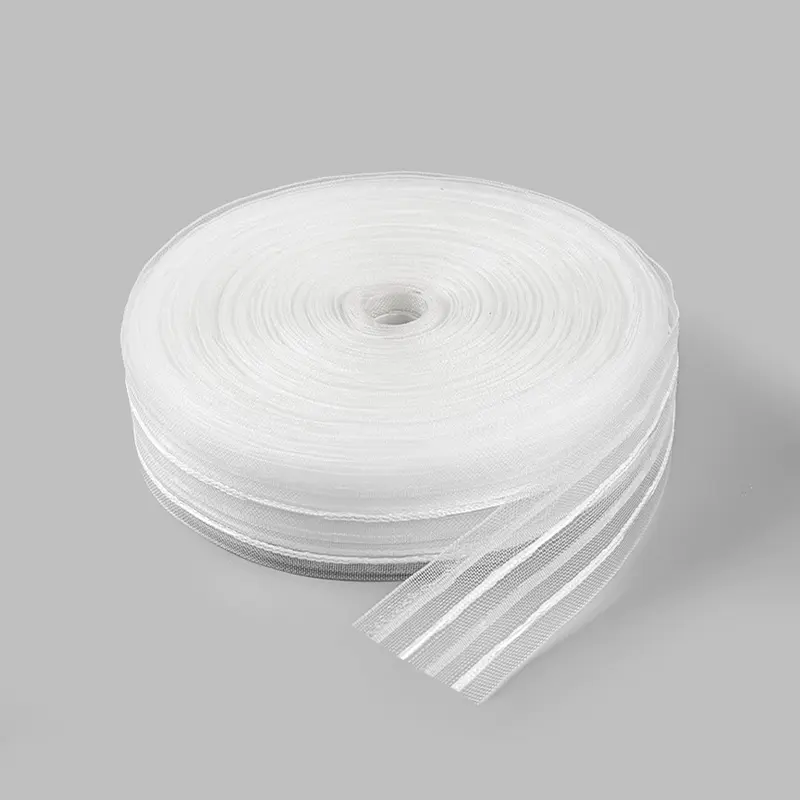
Consistency Starts With Raw Material Inspection
The quality of a finished curtain component depends partly on the materials used to produce it. Variations in yarn, fabric structure, tape width, or surface condition may affect how the material behaves during sewing.
A structured incoming inspection process can help manufacturers identify differences before materials enter bulk production. Useful checks may include:
- Confirming the specified width and overall construction
- Checking for visible defects, stains, or damaged edges
- Examining the consistency of the woven structure
- Verifying that cords and pockets are properly formed
- Comparing delivered materials with approved samples
These checks provide a practical starting point for maintaining consistent production standards.
Why Dimensional Stability Matters
Curtain tape needs to maintain a suitable shape while being handled, sewn, gathered, and installed. If its width changes noticeably or the material deforms during processing, the finished heading may not match the intended dimensions.
For Nylon Curtain Tape manufacturers, dimensional stability should be evaluated under the conditions in which the product will actually be used. Buyers can also clarify acceptable tolerances before confirming an order, especially when the tape is intended for automated sewing lines or large projects requiring uniform finished panels.
Clear specifications make it easier for both sides to assess whether a product meets the intended application.
Keep Sewing Performance in the Quality Checklist
A tape roll may appear acceptable during visual inspection but still create difficulties during sewing. Uneven feeding, excessive material distortion, or inconsistent pocket positioning can affect stitching accuracy and production speed.
Manufacturers can evaluate sewing performance through practical trials using representative machinery and sewing settings. The trial should examine whether the tape feeds smoothly, whether stitches remain consistent, and whether the finished heading can be formed as intended.
Testing under realistic production conditions helps reveal issues that may not be obvious when examining an unused roll.
Control Cord and Pocket Construction
Gathering cords and hook pockets directly influence how curtain headings are formed. If cords are difficult to pull or pockets are irregularly positioned, workers may spend more time adjusting individual panels.
Quality checks should therefore examine cord movement, pocket spacing, attachment, and the integrity of the woven structure. The required checks will depend on the tape design and intended heading style.
For bulk orders, evaluating these details across multiple samples can help identify variation between rolls before the material reaches the customer.
Establish Repeatable Production Standards
Consistent output requires more than checking the finished product at the end of the manufacturing process. Important production variables should be monitored at appropriate stages, including weaving, cord insertion, finishing, winding, and packaging where these operations apply to the product.
A repeatable inspection procedure can help production teams identify defects early and trace them to the relevant manufacturing stage. When a problem is detected, recording the affected batch and the corrective action can also support more consistent future production.
This approach is particularly useful for manufacturers supplying customers who place repeat orders and expect the same specifications across different shipments.
Protect Quality During Winding and Packaging
Even properly manufactured material can be affected by careless handling after production. Poor winding may create creases, tangling, or uneven roll edges, while inadequate packaging can expose the product to dust, moisture, or physical damage during storage and transportation.
Manufacturers should select winding tension, roll dimensions, labeling, and packaging methods according to the product structure and delivery requirements. Buyers can specify roll length, core dimensions, packaging preferences, and identification requirements when preparing an order.
Clear packaging standards also help warehouse teams identify products and manage inventory more efficiently.
Make Quality Requirements Clear Before Ordering
For overseas buyers, product quality is easier to evaluate when specifications are agreed upon before mass production begins. Sample approval, dimensional requirements, appearance standards, packaging details, and inspection procedures should be discussed as part of the order process.
A Nylon Curtain Tape manufacturer can use these requirements to align production controls with the buyer’s intended application. By combining material inspection, sewing trials, dimensional checks, and consistent packaging procedures, manufacturers can provide a more dependable basis for repeat orders and help curtain producers maintain stable output across different production batches.
Recommended News


- Contact Us
-
-
E-mail:422857394@qq.com
-
Phone:+86-13957583738
-
Address:Building 1, No. 765 Anchang Road, Kebei Industrial Park, Keqiao Economic Development Zone, Qixian Subdistrict, Keqiao District, Shaoxing City, Zhejiang Province, China
-

Fill out our contact form and we'll connect
you with the people who can help.
you with the people who can help.
